OneCX Architecture Overview
This chapter gives an overview of the fundamental architecture of OneCX.
Core Architecture Principles
The OneCX platform is built upon several core architectural principles that ensure scalability, flexibility, and maintainability:
-
Microservices- and microfrontend-based architecture: The platform is composed of independent services that can be developed, deployed, and scaled independently.
-
Backend for frontend (BFF): OneCX proposes and uses the backend for frontend pattern for communication between frontend and backend.
-
API-first design: RESTful APIs are used for communication between the frontend and backend, as well as between microservices.
-
Containerization and CI/CD: Services are containerized using Docker, and the project uses GitHub Actions for continuous integration and continuous deployment.
-
Cloud-native architecture: Services are designed to be deployed in cloud environments with Kubernetes for orchestration, ensuring easy scaling and high availability.
Applications
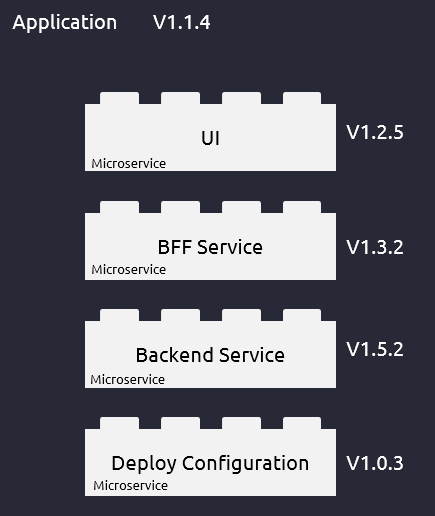
To reduce testing and deployment complexity OneCX uses a concept called application.
-
An application is a versioned bundle of frontends (typically: 1), BFFs (typically: 1), backend services (optional, typically one or many).
The frontend parts of an application are called apps. -
An application contains all system parts of a specific subdomain (e.g. user management).
Workspaces
In OneCX a workspace is a set of settings for a portal for a subset of the users or for a special purpose, e.g. there could be a workspace focusing on administrating the system or one focusing on sales. The number of workspaces in the system is not limited.
-
Basic properties like Name, Description, Logo, Base URL etc.
-
Theme relationship
-
Role definitions
-
Menu structure for navigation including role assignments
-
Application registrations as selected from the pool of available applications
-
Slot configurations for Remote Components